Professor Jonathan Cervas
Office: Posner Hall 374
Email: cervas@cmu.edu
Location: WEH 4623
Time: Tuesday 11:00a-12:20p Eastern
Office Hours: Wednesdays 2-4p & by appointment
CMU Academic Calendar
The most up-to-date version of this syllabus can be found here: https://github.com/jcervas/teaching/tree/main/2025-2026/class-cmu-2025-84-355
Prerequisites: 36-200 Reasoning with Data
Course Relevance: DC: Perspectives on Justice and Injustice
Course Description:
American democracy is rich with data — from historical vote tallies to modern polling, turnout, and campaign finance. In this course, we’ll investigate how democracy functions by analyzing this data, uncovering the political, social, and structural forces that shape electoral outcomes. Students will engage with historical case studies (e.g., 1876, 1960, 2000) alongside contemporary elections to see how past events illuminate present dynamics. Through lectures, labs, and projects, students will gain the tools to collect, analyze, and interpret electoral data — and apply these skills to real-world political questions.
Course Goals
By the end of this course, students will:
- Understand how data can illuminate the functioning of democratic systems.
- Identify historical and contemporary forces that shape electoral outcomes.
- Feel comfortable looking at, wrangling, and interpreting data
- Connect patterns in data to broader questions about political power, representation, and change.
Learning Objectives
Students will be able to:
- Collect and clean real-world electoral datasets.
- Conduct (basic) statistical analyses to identify trends in voting behavior.
- Interpret and visualize election data for academic and public audiences.
- Evaluate the impact of historical events on present electoral dynamics.
- Critically assess the strengths and limitations of various data sources.
Assessments
- Participation & Attendance – 20%
Active engagement in lectures and labs. - Weekly Lab Assignments – 50%
Hands-on data analysis exercises using real election datasets. - Data Journalism Project – 10%
Produce a data-driven news story that investigates a significant trend, pattern, or issue in electoral processes. - Policy Proposal or Data Journalism Project – 10%
Develop a policy proposal that addresses a specific issue in the electoral process. - Weekly Data Contributions – 10%
Submit one relevant data point related to politics or democracy, accompanied by a brief explanation and visualization to illustrate its significance.
Topics
- Introduction – Why study democracy with data?
- Elections as Data – Sources, structures, and pitfalls.
- Population & Demographics – How population shifts shape politics.
- Racial Threat Theory vs. Contact Theory – How racial dynamics shape voting and policy.
- Racial Resentment vs. Principled Conservatism – Prejudice or ideology?
- Public Opinion & Survey Data – Using the ANES and other sources to understand attitudes.
- Role of Partisan Identity – How party affiliation influences voter behavior.
- Malapportionment and Formal Representation – The impact of districting and institutions on representation.
- Electoral College – How it works, its effects, and alternatives.
- Campaign Strategies – Messaging, media, and targeting.
- Redistricting & Gerrymandering – The geometry of representation and its impact.
- Voter Turnout – What drives participation? Which parties benefit from higher turnout?
- Rational Voter vs. Low-Information Voter – Are voters policy-driven or guided by heuristics?
- Economic vs. Cultural Polarization – Are partisan divides driven by economics or cultural identity?
- Political Polarization – Causes and consequences for governance.
- Polling & Forecasting – Methods, models, and uncertainty.
- Media Effects – Does media reinforce views or change minds?
- Partisan Media – The rise of partisan news sources and their effects.
- Misinformation & Trust in Elections – Data and public opinion.
- Campaign Finance – Who funds elections and why it matters.
- The Parties in Our Heads – How partisanship shapes our views of the world.
- Election Administration – Laws, technology, and integrity.
- Median Voter Theorem vs. Party Polarization – Do parties converge or cater to their bases?
- Economic Inequality’s Impact on Democracy – Does inequality weaken democracy?
Assignments
-
Current Events Data Snippets:
- You must submit one piece of relevant data on the Canvas discussion board (slide on link provided) before class on Tuesday.
- You can access free articles and archives from the New York Times
and other major newspapers using your
cmu.eduemail. - You may be called on randomly to share your data nugget.
- I will create a shared powerpoint where you can post your slide.
- They will be graded on a completion basis (complete/incomplete).
Example:
Voter Turnout:About two-thirds (66%) of the voting-eligible population turned out for the 2020 presidential election1(https://www.pewresearch.org/politics/2023/07/12/voter-turnout-2018-2022/).
Create info-graphic visualizations to illustrate the data, to be posted on common slideshow. Link is provided on Canvas -
Weekly Lab Assignments
- Each week, you will complete a lab assignment that involves analyzing a dataset related to the week`s topic.
- These assignments will help you practice data cleaning, analysis, and visualization techniques.
- The assignments will be graded on a completion basis (complete/incomplete).
-
Data Journalism Project: This project requires you to write a compelling, data-driven news story investigating a significant electoral trend, pattern, or issue. You’ll combine original data analysis, at least two visualizations, expert interviews, and historical context to create an engaging narrative that explains how and why democracy functions as it does.
-
Policy Proposals:
This assignment asks you to develop a clear, evidence-based policy proposal addressing a specific electoral process issue such as voter turnout, election security, or poll accuracy. You’ll use data, historical analysis, and real-world examples to identify the problem, propose a solution, and justify its effectiveness for policymakers. -
Attendance:
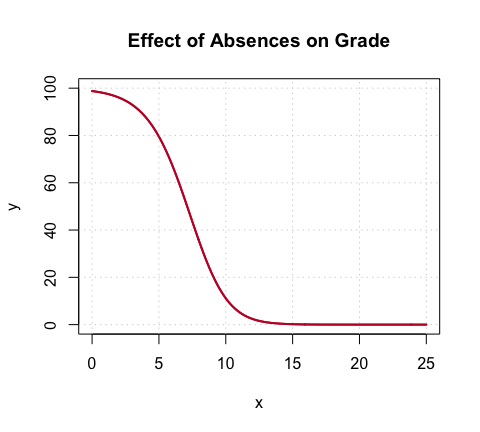
Regular attendance and active involvement form a significant part of your final grade (see grading section). If you do not show up, you will not earn an ‘A’. Participation is not just about being present; it involves engaging with the material, contributing to discussions, and collaborating with your peers. To recognize that occasional absences are sometimes unavoidable (e.g., for religious observance, job interviews, university-sanctioned events, or illness), attendance grades will be calculated using an exponential function. 1–2 absences → mild penalty, 6+ absences → sharp drop (serious consequences).
Students are expected and encouraged to meet all deadlines for assignments. If you are unable to complete the assignment work by the due date, reach out in advance to make alternative arrangements. I typically will not penalize you for turning in your assignment late, so long as it does not hinder completion of other`s work (ie, group projects).
The course grade will be a weighted average of the following components:
| Category | Percent of Final Grade |
|---|---|
| Participation & Attendance | 20% |
| Weekly Lab Assignments | 50% |
| Midterm Project | 10% |
| Policy Proposal | 10% |
| Weekly Data Contributions | 10% |
Schedule
Week 1
- Labs:
- Two Truths and a Lie
- 2024 Electoral Map
- ANES Scavenger Hunt
Week 2
- Bailey, Michael A. 2024. Polling at a Crossroads: Rethinking Modern Survey Research. Cambridge: Cambridge University Press. p. 3-22
- Optional Reading: Herbert F. Weisberg, Reflections: The Michigan Four and Their Study of American Voters: A Biography of a Collaboration, 49 PS: Political Science & Politics 845 (2016)
- Labs:
- Sensitive Interview Questions
- Questionaire Writing
Week 3
- NCSL Redistricting Law 2020, Chapter 1, The Census
Week 4
- Introductory to the American Community Survey (ACS) [Video]
Week 5
- No New Readings
Week 6
- Surname Analysis
-
- Kosuke Imai & Kabir Khanna, Improving Ecological Inference by Predicting Individual Ethnicity from Voter Registration Records, 24 Polit. anal. 263 (2016)
-
Week 7
- Guest Speaker, Jonathan Lai
- Pitch topics for Data Journalism
Week 8
- Surname Analysis
- Estimation and Coding
Week 9
- Redistricting and Gerrymandering
- NCSL Book, Chapter 4 (Redistricting Principles and Criteria)
- Is drawing a voting map that helps a political party illegal? Only in some states: https://www.npr.org/2023/05/17/1173469584/partisan-gerrymandering-explainer-north-carolina
- Gerrymandering Explained: https://www.brennancenter.org/our-work/research-reports/gerrymandering-explained
Sign up for DRA: https://davesredistricting.org/maps#home Links to an external site.
Week 10
- Parisan Gerrymandering
- Chapter 16 - Redistricing Algorithms - Political Geometry: Rethinking Redistricting in the US with Math, Law, and Everything In Between (Moon Duchin & Olivia Walch eds., 2022), https://link.springer.com/10.1007/978-3-319-69161-9.
Labs - CA Redistricting
Week 11
- Racial Polarization and Redistricting
-
Racially Polarized Voting, Redistricting Data Hub, https://redistrictingdatahub.org/resources/racially-polarized-voting/
-
John Sides & Michael Tesler, U.S. Voters Are Increasingly Polarized about Race, the Data Show., Good Authority, https://goodauthority.org/news/america-is-less-polarized-by-race-but-more-polarized-about-race/
-
Nadia E. Brown & Michael G. Strawbridge, A Key Part of the 1965 Voting Rights Act Is under Attack, Good Authority, https://goodauthority.org/news/a-key-part-of-the-1965-voting-rights-act-is-under-attack/
-
A Solution to the Ecological Inference Problem: reconstructing individual behavior from aggregate data - Chapter 1
Labs
- RPV
-
Week 12
- Political Polarization (elites)
- Mandatory: America Has Split, and It’s Now in ‘Very Dangerous Territory’: https://www.nytimes.com/2022/01/26/opinion/covid-biden-trump-polarization.html
- Suggested: Poole, Keith T., and Howard Rosenthal. “A Spatial Model for Legislative Roll Call Analysis.” American Journal of Political Science, vol. 29, no. 2, 1985, pp. 357–84. JSTOR, https://doi.org/10.2307/2111172.
- Optional: Poole, Keith T., and Howard Rosenthal. “Patterns of Congressional Voting.” American Journal of Political Science, vol. 35, no. 1, 1991, pp. 228–78. JSTOR, https://doi.org/10.2307/2111445.
Labs
- DW-Nominate Worksheet
- Political Tribes
Week 14
- Thanksgiving, no class
Week 15
- Apportionment and Electoral College
AI Use Policy for Student Work
As artificial intelligence (AI) tools become increasingly accessible, it is important to clarify expectations for their use in this course. You are welcome to use AI technologies (such as ChatGPT, Grammarly, or similar tools) to support your independent work—such as brainstorming ideas, checking grammar, or improving the clarity of your writing. However, you may not use AI to generate substantive content that you submit as your own original work. All assignments, essays, and projects must reflect your own analysis, critical thinking, and voice.
Permitted Uses of AI:
- Outlining or organizing your thoughts
- Checking grammar, spelling, or clarity
- Generating ideas or prompts to help you get started
- Reviewing your own drafts for readability
Prohibited Uses of AI:
- Submitting AI-generated essays, paragraphs, or answers as your own work
- Using AI to complete assignments, discussion posts, or projects in place of your own effort
- Copying and pasting AI-generated content without substantial revision and personal input
If you use AI tools in your process, you must disclose how you used them in a brief note at the end of your assignment (e.g., “I used ChatGPT to help brainstorm ideas for my outline.”).
Violations:
Submitting AI-generated content as your own is considered academic
dishonesty and will be treated as a violation of the university’s
academic integrity policy.
If you have questions about what is or is not allowed, please ask before submitting your work.
Representation Statement
I am committed to including a broad range of perspectives in the readings and materials for this course. If you believe a critical voice is missing, please let me know so I can improve the syllabus now and in future offerings.
We must treat every individual with respect. We come from many different backgrounds, and this variety of viewpoints is fundamental to building and maintaining an equitable and inclusive campus community. “Representation” can refer to the ways we identify ourselves—race, color, national origin, language, sex, disability, age, sexual orientation, gender identity, religion, creed, ancestry, belief, veteran status, or genetic information, among others. Each of these identities shapes the perspectives our students, faculty, and staff bring to campus. Promoting these varied viewpoints not only fuels excellence and innovation but also advances the pursuit of justice. We acknowledge our imperfections while fully committing to the work—inside and outside our classrooms—of building and sustaining a campus community that embraces these core values.
Each of us is responsible for creating a safer, more inclusive environment.
Unfortunately, incidents of bias or discrimination do occur, whether intentional or unintentional. They contribute to an unwelcoming atmosphere for individuals and groups at the university. Therefore, the university encourages anyone who experiences or observes unfair or hostile treatment on the basis of identity to speak out for justice and seek support—either in the moment or afterward. You can share your experiences using the following resources:
- Ethics Reporting Hotline
Submit an anonymous report by calling 844-587-0793 or visiting cmu.ethicspoint.com.
All reports are documented and reviewed to determine whether further action is needed. Regardless of the incident type, the university will use your feedback to transform our campus climate into one that is more equitable and just.
Accommodations for Students with Disabilities
If you have a documented disability and an accommodations letter from the Office of Disability Resources, please discuss your needs with me as early in the semester as possible. I will work with you to ensure that accommodations are provided as appropriate. If you suspect you may have a disability and are not yet registered with the Office of Disability Resources, you can contact them at access@andrew.cmu.edu.
Student Well-Being
The past few years have been challenging. We are all under significant stress and uncertainty. I encourage you to find ways to move regularly, eat well, and reach out to your support system—or to me at cervas@cmu.edu—if you need help. We can all benefit from support during stressful times, and this semester is no exception.
As a student, you may experience a range of challenges that interfere with learning, such as strained relationships, increased anxiety, substance use, feeling down, difficulty concentrating, or lack of motivation. These mental health concerns or stressful events can diminish your academic performance and reduce your ability to participate in daily activities. CMU offers services that can help, and treatment does work. Learn more about confidential mental health services available on campus at:
- Counseling and Psychological Services:
http://www.cmu.edu/counseling/
Phone (24/7): 412-268-2922
Please remember that support is always available—don’t hesitate to reach out.
Major Debates in American Politics: Reference Sheet
1. Public Opinion & Political Behavior
- Racial Threat Theory vs. Contact Theory
- Key Question: Does diversity increase prejudice or reduce it through interaction?
- Representative Scholars/Studies: V.O. Key (1949); Blalock (1967); Allport (1954); Pettigrew & Tropp (2006)
- Economic vs. Cultural Polarization
- Key Question: Are partisan divides driven by economics or cultural identity?
- Representative Scholars/Studies: Hochschild (2016); Inglehart & Norris (2016); Autor, Dorn, Hanson (2013)
- Rational Voter vs. Low-Information Voter
- Key Question: Do voters make decisions based on policy or heuristics?
- Representative Scholars/Studies: Downs (1957); Converse (1964)
- Partisan Identity as Social Identity
- Key Question: Is partisanship a social identity or rational policy choice?
- Representative Scholars/Studies: Campbell et al. (1960); Green, Palmquist, & Schickler (2002)
2. Institutions & Representation
- Majoritarianism vs. Countermajoritarianism
- Key Question: Should institutions reflect majority will or protect minorities?
- Representative Scholars/Studies: Dahl (1956); Bickel (1962)
- Descriptive vs. Substantive Representation
- Key Question: Does shared identity between reps and constituents matter?
- Representative Scholars/Studies: Pitkin (1967); Mansbridge (1999)
- Electoral College & Malapportionment
- Key Question: Do these features protect federalism or undermine equality?
- Representative Scholars/Studies: Edwards (2004); Lee & Oppenheimer (1999)
3. Federalism & State Power
- Centralization vs. Decentralization
- Key Question: Should policy be set nationally or locally?
- Representative Scholars/Studies: Riker (1964); Kincaid (1990)
- Policy Diffusion
- Key Question: Do states innovate and spread good policy or reinforce inequality?
- Representative Scholars/Studies: Walker (1969); Berry & Berry (1990)
4. Political Polarization
- Elite-Driven vs. Mass-Driven Polarization
- Key Question: Are elites or the public the primary driver of polarization?
- Representative Scholars/Studies: Fiorina et al. (2005); Abramowitz & Saunders (2008)
- Asymmetric Polarization
- Key Question: Is polarization equal on both sides or skewed?
- Representative Scholars/Studies: McCarty, Poole, & Rosenthal (2006); Mann & Ornstein (2012)
5. Race, Ethnicity, & Politics
- Linked Fate vs. Individualism
- Key Question: Do marginalized groups vote as a bloc due to shared fate?
- Representative Scholars/Studies: Dawson (1994); McClain et al. (2009)
- Racial Resentment vs. Principled Conservatism
- Key Question: Is opposition to minority-focused policy driven by prejudice or ideology?
- Representative Scholars/Studies: Kinder & Sears (1981); Kinder & Kam (2009); Sniderman & Carmines (1997)
6. Political Economy
- Median Voter Theorem vs. Party Polarization
- Key Question: Do parties converge to the median voter or cater to their bases?
- Representative Scholars/Studies: Downs (1957); Ansolabehere et al. (2001)
- Economic Inequality & Democracy
- Key Question: Does inequality weaken democracy or can institutions buffer it?
- Representative Scholars/Studies: Gilens (2012); Bartels (2008)
7. Political Communication
- Media Effects: Minimal vs. Strong
- Key Question: Does media mainly reinforce views or change minds?
- Representative Scholars/Studies: Lazarsfeld et al. (1944); Iyengar & Kinder (1987)
- Social Media & Polarization
- Key Question: Is social media polarizing politics or reflecting existing divides?
- Representative Scholars/Studies: Bail et al. (2018); Tucker et al. (2018)
-
Pew Research Center ↩